Rabbits & "Pocket Pets"
Pet stores often present small animals as "pocket pets": easy, affordable, "starter" companions. But that is far from the truth. Their small size makes them easy to sell, but not easy to care for.
Here, we go into why this is such a big issue, and what you can do beyond "Adopt, Don't Shop".

The Vicious Cycle of Rabbit Dumping
(What Pet Stores Don’t Tell You)
1
Breeding & Supply Chain Failures
Rabbits enter the retail system through a commercial pipeline where breeder transparency, recordkeeping, and animal welfare standards can be poor, inconsistent or difficult for consumers to verify.
Rabbits are frequently confined and sold mis-sexed or pregnant, left with untreated illnesses, or having been neglected and cramped leading to behavioral issues such as aggression—problems that only become apparent after families leave the store.
2
Misinformation & Impulse Purchases
Rabbits are frequently marketed as Easter or Christmas gifts for children, which leads to rushed, unprepared decisions.
Rabbits are a long-term commitment.
As "prey animals", rabbits are typically not suitable for children, and suffer deeply when handled or in loud environments– or neglected.
3
Neglect, Surrender & Abandonment
After the excitement wears off, when hit with specialized veterinary costs, behavioral issues, surprise litters, disease, worms, or when care becomes overwhelming; families are faced with a no-refund, no-return policy (unlike shelters). In many ways, unaware buyers are being scammed. Many abandon their rabbit(s) outside already-full shelters. Others justify abandoning rabbits outside, thinking they will "be free" or "go back to nature".
4
Who Pays the Price
Contrary to popular belief, domestic rabbits have no survival defenses in the wild, so abandonment frequently results in injury, predation, traffic accidents, death by pests, or exposure to the elements.
Surrounding rescuers and shelters are out of resources and time, rescuing and caring for hundreds of rabbits who were once purchased, not adopted.
The Pet Trade
A Public Health Issue
"Traded mammals are about 1.5 times as likely to be sources of human diseases than non-traded animals, the researchers report in Science. Crucially, the longer humans have been interacting with a species, the more viruses we have in common — especially when dealing with illegal animals and live markets."
- Colin Carlson, a disease ecologist at Yale University


Limited Examples of Enforcement
Limited oversight and inconsistent enforcement can make it difficult to assess how widespread problems are within the commercial small-animal trade.
As animal advocated know all-too-well, violations may go unreported, complaints may go uninvestigated, and harmful conditions may continue for extended periods before regulatory agencies intervene, or else not result in any formal enforcement.
Enforcement can be few and far between, but when enforced, shows the gravity of animal abuse, and just how far-reaching its consequences can be.
The following documented cases serve as examples of how inadequate veterinary care and improper breeding practices repeatedly surfaced throughout the commercial pet industry and supply chain—including among federally licensed, large-scale breeders and distributors to retail outlets themselves.
-
Pennsylvania (USDA + AP investigation)
-
A federally licensed dealer supplying major pet stores was cited for at least 117 violations of the Animal Welfare Act, with inspectors finding sick and dead guinea pigs and rabbits, animals denied veterinary care, and improper euthanasia practices; the case led to a federal investigation and loss of business from major retailers.
-
-
Michigan (federal complaint case)
-
A Michigan exotic pet retailer faced a federal complaint alleging repeated Animal Welfare Act violations, including failure to provide adequate care, improper records, and obstruction of USDA inspections—demonstrating that enforcement actions also occur at the retail level, not just with breeders and suppliers.
-
-
Sun Pet (national supplier, multiple records)
-
Sun Pet Ltd., a major U.S. supplier of small mammals to pet stores, has been the subject of state penalties, undercover investigations, and USDA warnings, including a 2025 federal notice citing failure to provide adequate veterinary care, along with documented cases of overcrowding, illness, and animal deaths within its supply chain.
-
Taken together, these cases show that documented problems with small mammals in the pet trade are not isolated incidents, but part of a broader pattern recorded across federal inspections, state enforcement actions, and supplier networks. They also demonstrate why stronger oversight, transparency, and enforcement are important safeguards for both animals and consumers.
The Animal Store
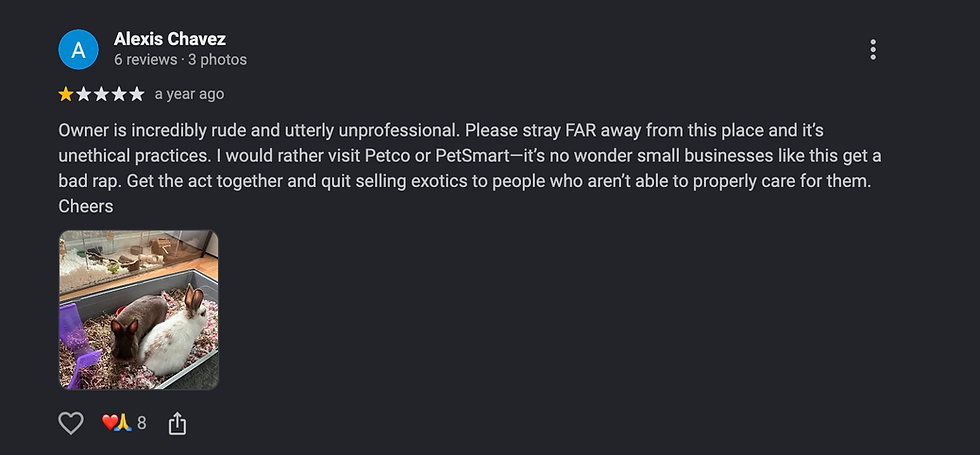
The Animal Store, in Lincolnwood Illinois, sells dozens of species of small, domesticated mammals in small, plastic tanks, with tiny air holes; and there is only one temperature: hot. This is a breeding-ground for zoonotic diseases.
Many families surrender/dump/abandon their rabbit within months, contributing directly to the growing intake faced by local rescues.
Again, contrary to popular belief, domestic rabbits cannot survive in the wild. They have no defense mechanisms. They often suffer to death in the elements, are eaten by disease and pests, or fall victim to predators or traffic.
So, you might be wondering... how is this being allowed? And what can I do to help?


Lincolnwood Has the Power to Protect Rabbits
Municipalities like Lincolnwood retain the authority to determine their own local ordinances within village boundaries.
It can feel like Lincolnwood exists in a bubble or on an island. But it doesn’t. These animals are being treated as disposable objects; bred, confined, and sold within a system that prioritizes profit over welfare. And they don't stay in Lincolnwood; they are transported elsewhere, and abandoned.
Lincolnwood's Mayor and Trustees exclusively hold the power to immediately end this reckless cycle of suffering immediately, simply by voting in alignment with home-rule authority of Cook County.
Shelters Full; Breeding for Profit Continues
Rescue Density Is a Warning Sign—Not a Solution

Across the Chicagoland area, animal shelters and rescues are already overwhelmed with rabbits—yet the commercial breeding and sale of rabbits and other small mammals continues. This concentration of rescue organizations across Chicagoland is not coincidental—it reflects a system in which retail sales operate with limited oversight, while rescues absorb the consequences, with limited space, resources, and time.
Rescues like
-
Red Door Animal Shelter
-
Wonder Bunny Rabbit Rescue
-
The Moon Dog Farm
-
House Rabbit Society of Chicago
-
Great Lakes Rabbit Sanctuary
-
One Tail at a Time
-
Community Animal Rescue Effort
-
Evanston Animal Shelter and
-
Bunnies United
—along with many others—are working tirelessly to care for animals who were once purchased, not adopted.
Gaps in Protection
Across Chicagoland, communities are phasing out pet stores—shifting toward adoption-based models that prioritize animal welfare. While surrounding areas across Cook County have embraced these protections, Lincolnwood still allows rabbits to be sold from breeders, creating gaps in protection.
Cook County Code – Section 10‑13 (Pet store sales ordinance):
Pet stores can ONLY sell rabbits (and dogs/cats) if they come from:
→ animal shelters, OR
→ rescue organizations
What’s effectively banned:
Selling rabbits from
→ breeders
→ commercial suppliers (“rabbit mills”)
In November 2025, the Las Vegas City Council passed an ordinance prohibiting newly licensed pet stores from selling animals such as rabbits and guinea pigs, with a full phase-out of these sales for all stores scheduled by 2028. Lincolnwood can take similar action.
The Cost of Convenience
The numbers speak for themselves, though the rabbits cannot.
They also show a pattern, not an isolated incident.


Small Species,
Big Needs.
Lives That Cannot Fit In Cages—Or Pockets.
Species reportedly or potentially sold (past or present) at The Animal Store:
Rabbits:
Holland Lop
Mini Lop
Netherland Dwarf
Lionhead
Mini Rex
Dutch
Rex
Californian
New Zealand (white)
Harlequin
Himalayan
Polish
Silver
Marten
Rabbits:
Havana
American Fuzzy Lop
Jersey Wooly
Mini Satin
Britannia Petite
French Lop
English Lop
Checkered Giant
Flemish Giant
English Angora
French Angora
Satin Angora
Double-maned Lionhead
Small mammals:
Syrian hamster Campbell’s dwarf hamster
Roborovski dwarf hamster
Guinea pig
Gerbil
Rat
Mouse
Ferret
Chinchilla
The Hidden Needs of Small Animals
Rabbits & small mammals are not easy pets. They are living beings who demand time, space, and informed care. Across all of these species, confinement and misinformation lead to suffering.
Understanding how small mammals thrive is a crucial step toward protecting them—and rethinking the systems that put them at risk.

01
Domestic Rabbits
Rabbits are intelligent, emotionally complex animals who need space to run, dig, and express natural behaviors.
They require companionship, proper diet, and attentive veterinary care.
Confinement in small cages leads to physical decline, loneliness, and psychological distress.

04
Hedgehogs
Hedgehogs commonly sold in the pet trade are captive-bred, but their instinctual behaviors have been shaped by their wild ancestors.
They are nocturnal, solitary animals who require warm, temperature-controlled environments to prevent hibernation attempts, which can be dangerous or fatal in captivity.
Hedgehogs need space to roam and forage, quiet surroundings, and gentle, knowledgeable handling. Stress from improper temperatures, frequent handling, or confinement can lead to illness, fear responses, and injury.
02
Guinea Pigs
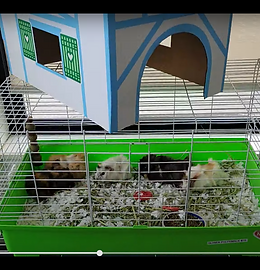
Guinea pigs are deeply social animals who need companionship, gentle handling, and quiet environments.
Yet many are kept alone, fed improper diets, or placed in chaotic settings like classrooms, where loud noise, frequent handling, and inconsistent care cause chronic stress and illness.

05
Chinchillas
Chinchillas are prey animals adapted to cool, dry climates and are extremely sensitive to heat and humidity, making typical home environments risky without careful temperature control.
They require large, vertically enriched spaces to jump and move, along with regular dust baths to maintain healthy fur and skin.
Their care is highly specific, and they can live 10–20 years—far from a simple or short-term commitment.
Easily stressed by noise, handling, and environmental changes, chinchillas can develop serious health and behavioral issues when confined or improperly cared for, including overheating, fur loss, injury, and chronic stress.

03
Ferrets
Ferrets, while domesticated, retain strong instinctual behaviors like tunneling, roaming, and constant exploration.
They are highly active and require several hours of supervised time outside of enclosures every day, along with social interaction and enrichment.
They also need specialized, high-protein diets and veterinary care for conditions such as adrenal disease and insulinoma.
When confined for most of their lives, ferrets often suffer from stress, frustration, and serious health issues.

06
Sugar Gliders
Wild, not domesticated. Considered "pocket pet" due to their small size.
Daily range: Glide up to 150 feet between trees; home range can be several acres.
Nocturnal and need vertical climbing and flying space. Caging them leads to stress and depression.


The Animal Store also sells wild animals; both captive-bred and wild-caught.
The Simple Solution
Rabbit abandonment is not inevitable. Enforcing animal law is not radical. It is responsible governance.
Call
847-745-4717
Sample Message: Hello, my name is [ _____ ], and I’m a resident of [neighborhood] / Lincolnwood. I’m calling because I care deeply about how animals are treated in our community. Animals like rabbits, guinea pigs, and ferrets are often sold as easy pets, but in reality, they have complex needs and frequently suffer in small cages or from improper care. They are intelligent, social beings, and it’s heartbreaking how often their needs are misunderstood. I’m asking Mayor Jesal Patel to consider restricting the sale of these animals in pet stores due to these welfare concerns. Other cities, including the Las Vegas City Council, have already taken this step. I would truly appreciate a response and would welcome the opportunity to be part of a conversation or meeting about this issue. You can reach me at [your contact]. Thank you so much for your time.
Mayor Patel and the Trustees of Lincolnwood
To:
CC:
jhalevi@lwd.org,cmartel@lwd.org,cklatzco@lwd.org,gherrera@lwd.org,asargon@lwd.org,administration@lwd.org,info@allianceforlincolnwood.com,info@lincolnwoodchamber.com,jan.schakowsky@mail.house.gov,info@senatorram.com,info@kevinolickal.com,Josina.Morita@cookcountyil.gov,Chicagoallianceforanimals@gmail.com
TESTIFY
Give a public comment at a Lincolnwood Board meeting. They are typically held each 1st and 3rd Tuesday of every month).
Testimonies must be 3-minutes or less.
If you wish, we can attend with you and guide you through the process. Get in touch to learn more.
peaceful Protest
Please join us at one of our educational demonstrations or protests. These peaceful events are only an hour long, and all you need is a smile! Chicago Alliance for Animals provides all the signs, flyers, petitions, and materials you’ll need.




FAQ
Is this about limiting choice?
Nope! Residents can still adopt small animals from shelters and licensed rescues.
This is about stopping and preventing harm caused by unregulated, profit-driven retail sales.
Why focus on animals when humans are suffering?
Compassion isn’t a competition. These protections exist because animal exploitation often creates human consequences — public-health risks, environmental damage, and long-term community costs.
Recap
Why This Matters in Our Community

Dangerous Diseases
Enforcing village codes and rabbit sale laws reduces the risk of zoonotic diseases.

Cruel and Unusual Punishment
Volunteers are overwhelmed with abandoned rabbits—and other small animals—while more are bred and sold down the block.

Safety for All
Prevent injuries from frightened or mishandled animals.

Entitlement
Helps children learn that animals are living beings—not products. Rejects the idea that animals exist for convenience or impulse purchases. Models compassion over consumption for future generations.

Bills, Neglect, Abandonment
Prevents difficult situations for families.

Shared Values
Many rabbits are sold around Easter and Christmas. Yet abandonment and neglect stand in direct contrast to Christian values of compassion, stewardship, and care for creation.
Why Adopt a Rabbit Instead of Buying One?

Many rabbits are mishandled and even maimed by children. This is why thoughtful, informed adoption is so important.

Many rabbits sold in pet stores are already ill when purchased, highlighting the poor conditions and lack of proper veterinary care in breeding and retail facilities.

Rabbits are often mis-sexed or misgendered, which can lead to accidental litters and more animals in need of homes. Some are already pregnant when sold—further proof of irresponsible animal sales.
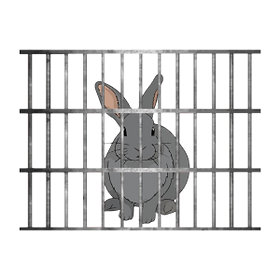
Like other animals in pet stores, they’re doomed to go from one cage to another—never experiencing freedom. Most rabbits sold in pet stores end up neglected, isolated, and confined to a cage for hours each day.

Rescues and shelters are overwhelmed with abandoned rabbits—and other small animals in need of homes—while more are bred and sold down the block.

Those who are later abandoned or “dumped” outside often suffer to death from worms, injuries, or exposure, with no protection and no ability to defend themselves.

Rabbits are complex, sensitive animals who require specialized care.

Preventing predictable harm is part of responsible, community-centered governance.

When confined to cages without stimulation or space, rabbits suffer deeply, often developing depression or aggression from their inability to express natural behaviors.
Lincolnwood government officials must protect public safety; vulnerable, innocent sentient beings; our environment; children and families; volunteers; surrounding communities; drivers; and limited time and resources.
The Cost of Convenience
Adopt, Don't Shop


