Why Adopt a Rabbit Instead of Buying One?
When Choosing a Rabbit, Does Where They Come From Matter?

Many rabbits are mishandled and even tormented by children.

Many rabbits sold in pet stores are already ill when purchased, highlighting the poor conditions and lack of proper veterinary care in breeding and retail facilities.

Rabbits are often mis-sexed or misgendered, which can lead to accidental litters and more animals in need of homes. Some are already pregnant when sold—further proof of irresponsible animal sales (illegal by Cook County law).
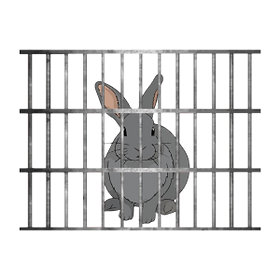
Like other animals in pet stores, they’re doomed to go from one cage to another—never experiencing freedom. Most rabbits sold in pet stores end up neglected, isolated, and confined to a cage for hours each day.

Rescues and shelters are overwhelmed with abandoned rabbits—and other small animals in need of homes—while more are bred and sold down the block.

Those who are later abandoned or “dumped” outside often suffer to death from worms, injuries, or exposure, with no protection and no ability to defend themselves.

Rabbits are complex, sensitive animals who require specialized care.

Preventing predictable harm is part of responsible, community-centered governance.

When confined to cages without stimulation or space, rabbits suffer deeply, often developing depression or aggression from their inability to express natural behaviors.
Why this matters to the community

Reduce the risk of zoonotic disease
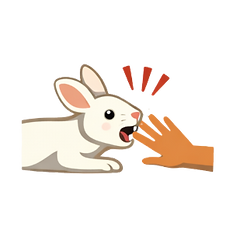
Prevent injuries from frightened or mishandled animals

Prevents trauma when a family can't afford medical bills, and has nowhere to surrender their rabbit.

Volunteers are overwhelmed with abandoned rabbits—and other small animals—while more are bred and sold down the block.

Many rabbits are sold around Easter or marketed as “starter pets.” Yet abandonment and neglect stand in direct contrast to Christian values of compassion, stewardship, and care for creation.

Helps children learn that animals are living beings—not products. Rejects the idea that animals exist for convenience or impulse purchases. Models compassion over consumption for future generations.
Lincolnwood Has the Power to Protect Rabbits
The Village of Lincolnwood waived Cook County’s humane ordinance, which prohibits the sale of rabbits—but they can still choose compassion and stop this cycle of cruelty.
These protections exist to reduce cruelty, public-health risks, abandonment, and environmental harm—harms that rabbits are especially vulnerable to due to overbreeding, improper care, and impulse purchases.
The Village of Lincolnwood has the authority to align with these protections.
Village officials have acknowledged that enforcement has been waived by choice—not because the Village lacks the legal power to act.
Shelters Full; Breeding Continues
Red Door Animal Shelter, Wonder Bunny Rabbit Rescue, Palatine House Rabbit Society of Chicago Great Lakes Rabbit Sanctuary, One Tail at a Time, Community Animal Rescue Effort, Evanston Animal Shelter, Wonder Bunny Rabbit Rescue, Bunnies United and more-- are all affected.
Red Door
January 10 at 9:34 am
"Meet the new strays...Twinkle was found in Warren Park, just blocks from Red Door and next to the awful meat shop 😡
Tinsel was found in Jefferson Park by good Sams
Cosette was rescued by Dumped Bunny in Wheeling- 2025's hotspot
Confetti was rescued by DB in Rockford
Corfu is one of 7 babies found in Lake county a few months ago.
Bonsai was found in Jefferson Park by good Sams.
HOP Lovecraft was found in a box in a dumpster in Jefferson Park- our new hotspot. Who in Jefferson Park is backyard breeding??"


Animals With Complex Needs Unsuitable for Confinement
Many animals sold in pet stores are wild species, or derived from wild stock, with complex physical and psychological needs that cannot be met in captivity.
Domestic rabbits descend from wild European rabbits, who live in expansive social colonies and maintain acres of underground warren systems. Domesticated rabbits retain strong instinctual behaviors from their wild ancestors, needing to dig, run, forage, and constantly be on the move for their physical and mental health. They need large, enriched spaces; litter training; gentle handling; socialization; mental stimulation; and proper diets. Caging them for hours leads to stress. Frightened or unsocialized rabbits may bite, scratch, or panic. Rabbits are often sold without breeder information — misgendered, pregnant, or ill. Many are purchased as Easter gifts and soon neglected. Many have been harmed by children who chase, grab, yell in their sensitive ears, and even tragically maim them by snipping their ears or tails.
Ferrets are domesticated animals, but they retain strong instinctual behaviors from their wild ancestors, including tunneling, roaming, and exploration. They are highly active and require several hours of supervised, out-of-cage time each day, along with social interaction, enrichment, and safe environments. Ferrets also require high-protein diets and specialized veterinary care for common conditions such as adrenal disease, insulinoma, and dental issues. When confined to small enclosures for most of the day, ferrets often develop stress-related behaviors, frustration, and health problems.
Guinea pigs need companionship, calm environments, and space to explore and hide. Many are kept alone, fed inadequate diets, or left in classrooms where loud noises, mishandling, and long periods without supervision cause ongoing stress and health problems. The Las Vegas City Council passed a new ordinance in November 2025, banning new pet stores from selling dogs, cats, rabbits, guinea pigs, and potbellied pigs. Lincolnwood can do the same.
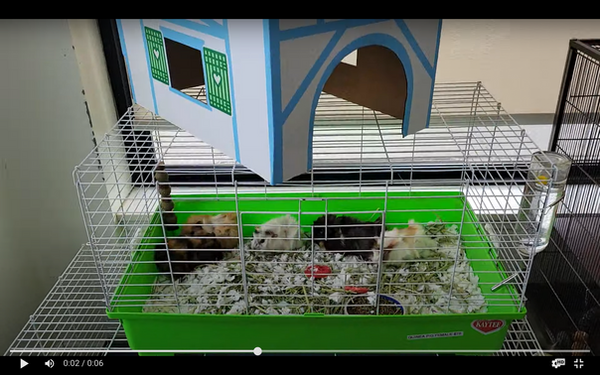
This is why thoughtful, informed adoption is essential for animal protection.
So many wrongs. One simple solution. Enforce humane law.
The Simple Solution
The Mayor and Trustees of Lincolnwood re-vote in alignment with Cook County's humane laws. Rabbit abandonment is not inevitable.
Enforcing humane law is not radical.
It is responsible governance.
How to Help
You can help by:
1. Calling or emailing Mayor Patel of Lincolnwood
847-745-4717
(More emails below)
Please request a response or a meeting
2. Giving a 3-minute-or-less public comment at a Lincolnwood Village Board meeting (1st and 3rd Tuesday of every month) (if you wish, we may guide you on how to do this, and attend with you)
To: jpatel@lwd.org
CC: jhalevi@lwd.org,cmartel@lwd.org,cklatzco@lwd.org, gherrera@lwd.org,asargon@lwd.org,administration@lwd.org,info@allianceforlincolnwood.com,info@lincolnwoodchamber.com,jan.schakowsky@mail.house.gov,info@senatorram.com,info@kevinolickal.com,Josina.Morita@cookcountyil.gov,Chicagoallianceforanimals@gmail.com
Officials to Contact
FAQ
Is this about limiting choice?
No. Residents can still adopt small animals from shelters and licensed rescues. This is about preventing harm caused by unregulated, profit-driven retail sales.
Why focus on animals when people are suffering?
Compassion isn’t a competition. These protections exist because animal exploitation often creates human consequences — public-health risks, environmental damage, and long-term community costs.
